Home >>
Home Living >>
Luxury Interior Trends Worth Exploring
For high-net-worth individuals, luxury home decoration has long since moved beyond the misconception of "piling up luxury," instead pursuing a living experience characterized by "appropriate texture, precise functionality, and lasting aesthetics." According to the latest home decoration industry survey data from 2026, the market share of traditional, elaborate European and heavy American styles continues to decline, while minimalist, soothing, and practical styles have become the absolute mainstream. Over 85% of owner-occupiers prioritize low-saturation, light-form, and high-quality interior design. Especially for ordinary families renovating their homes, the core demand has shifted from "simply aesthetically pleasing" to "comfortable to live in, durable, timeless, and not oppressive."
Minimalist Luxury Elevates: From "Formal Minimalism" to "Experiential Minimalism"
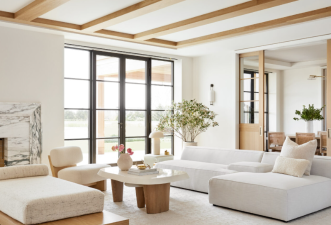
The minimalist luxury of 2026 is no longer a superficial minimalism of "emptiness," but a deep minimalism of "invisible functionality and a smooth experience." The core principle is "Leave the complexity to design, leave the simplicity to life"—for example, by using customized concealed storage systems to completely embed appliances and miscellaneous items into cabinets, maintaining a tidy space; employing a "no main light + natural light and shadow" design, replacing cumbersome light fixtures with layered lighting to create a warm and airy atmosphere; and reducing hard decorative elements, using the natural textures of materials (such as the grain of natural marble and the warmth of solid wood) to create a sense of luxury.
This design philosophy demands extremely high attention to detail. For example, the treatment of concealed door seams in cabinets, precise matching of light color temperature, and the splicing techniques of materials all require in-depth refinement by a professional team. In a recent high-end apartment project, Shangzheng Interior Design Co., Ltd. achieved a minimalist and luxurious space that is "visually simple and convenient to use" through a solution combining "concealed storage + no main light design + natural material pairing," earning high praise from the homeowner.
Functional Customization, Creating "Exclusive Living Scenarios"
The core of high-end design is "people-oriented," and in 2026, the emphasis is even more on "scenario-based functional customization," which means creating exclusive functional spaces based on the homeowner's lifestyle and interests. For example, for homeowners who love collecting, a temperature- and humidity-controlled art/wine collection room can be designed; for fitness enthusiasts, a dedicated family fitness area can be created, equipped with high-end fitness equipment and an intelligent monitoring system; for families with children, a "growth-oriented parent-child space" can be designed, balancing current use with future developmental needs.
The key to scenario-based customization is "precise matching of needs," rather than blindly adding functional areas. For example, we once served a homeowner who worked from home year-round, creating a combined space of "panoramic office area + leisure tea corner" on the second floor of a villa. The office area was equipped with a smart height-adjustable desk, ergonomic chair, and professional soundproofing system, while the tea corner featured a minimalist sofa and floor-to-ceiling windows with views, satisfying both the need for efficient work and the opportunity to relax and enjoy the scenery, perfectly matching the homeowner's lifestyle.
Natural Integration – Bringing Luxury Homes Closer to Nature
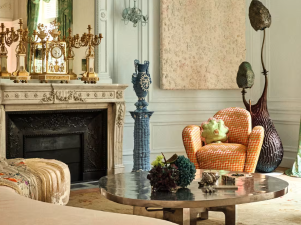
In the post-pandemic era, "natural healing" has become a core demand for high-end living. The design trend for 2026 emphasizes the "natural integration of indoor and outdoor spaces." For example, large floor-to-ceiling windows and folding glass doors break down the boundaries between the interior and the courtyard/terrace, allowing natural light and greenery to permeate the space. Material selection prioritizes natural stone, solid wood, and cotton/linen, replacing synthetic materials to create a warm, natural feel. Vertical green walls and courtyard ponds are incorporated into the interior to enhance the natural atmosphere and air quality of the space.
It's important to note that natural integration is not simply about "placing greenery," but rather "systematic planning." For instance, in a seaside mansion project, we combined local climate characteristics with a "tropical plant landscape + outdoor leisure area" design on the terrace. The interior uses light-colored natural marble and cotton/linen soft furnishings, echoing the outdoor azure sea and coconut palms while ensuring the space remains airy and dry, achieving a living experience of "seeing nature through the window and enjoying tranquility behind closed doors."
Summary
The core of high-end design in 2026 is "precise adaptation."
Whether it's the advancement of minimalist luxury, the customization of functions, or the trend of natural integration, the essence is "to ensure that the design precisely adapts to the homeowner's lifestyle needs and spiritual pursuits." A truly high-end luxury home is not a mere "superficial" structure built with expensive materials.